Nanjing East Road embodies Shanghai's rich historical legacy while pulsing with the energy of contemporary commerce. The opening of Li-Ning's premium retail format, LOONG STORE, at this landmark address signals more than the debut of a new flagship: it is a declaration of how a sports brand can redefine itself through the language of space.
Founded more than three decades ago, Li-Ning is rooted in Olympic achievement and a strong sense of cultural confidence. As the brand opens a new chapter under the name “Loong(which means dragon in Chinese),” the designers looked beyond the dragon as a literal symbol and focused instead on its kinetic force: an energy in the making—coiling, rising, and gathering deep beneath the earth before breaking through the surface. This is the essence of sport: not merely the instant of release, but the irrepressible power building before it.
The design intent therefore became both clear and resolute: to translate this perpetual momentum into an abstract spatial expression of the brand's ethos, allowing the tension of “power breaking through boundaries” to unfold across the building facade and take material form in every texture of the interior.
Power as the Point of Departure
Through an in-depth study of the retail concept, the designers adopted the dragon as a spiritual metaphor and distilled it to a state of pure force: the latent tension of a dragon weaving and coiling through rock, poised to break free. Stillness and motion, accumulation and release, stability and rupture coexist. This duality evokes the embodied memory of competitive sport and gives tangible form to Li-Ning's brand ethos. From it emerged the central narrative of the “Dragon in the Rock,” in which the beauty of motion is recast through a moment of sculptural stillness.
An Urban Sculpture Breaking Through the Rock
A distinctive design language is what enables a space to endure over time. The facade becomes the most direct expression of that identity to the city—and the visual cover of the entire narrative.
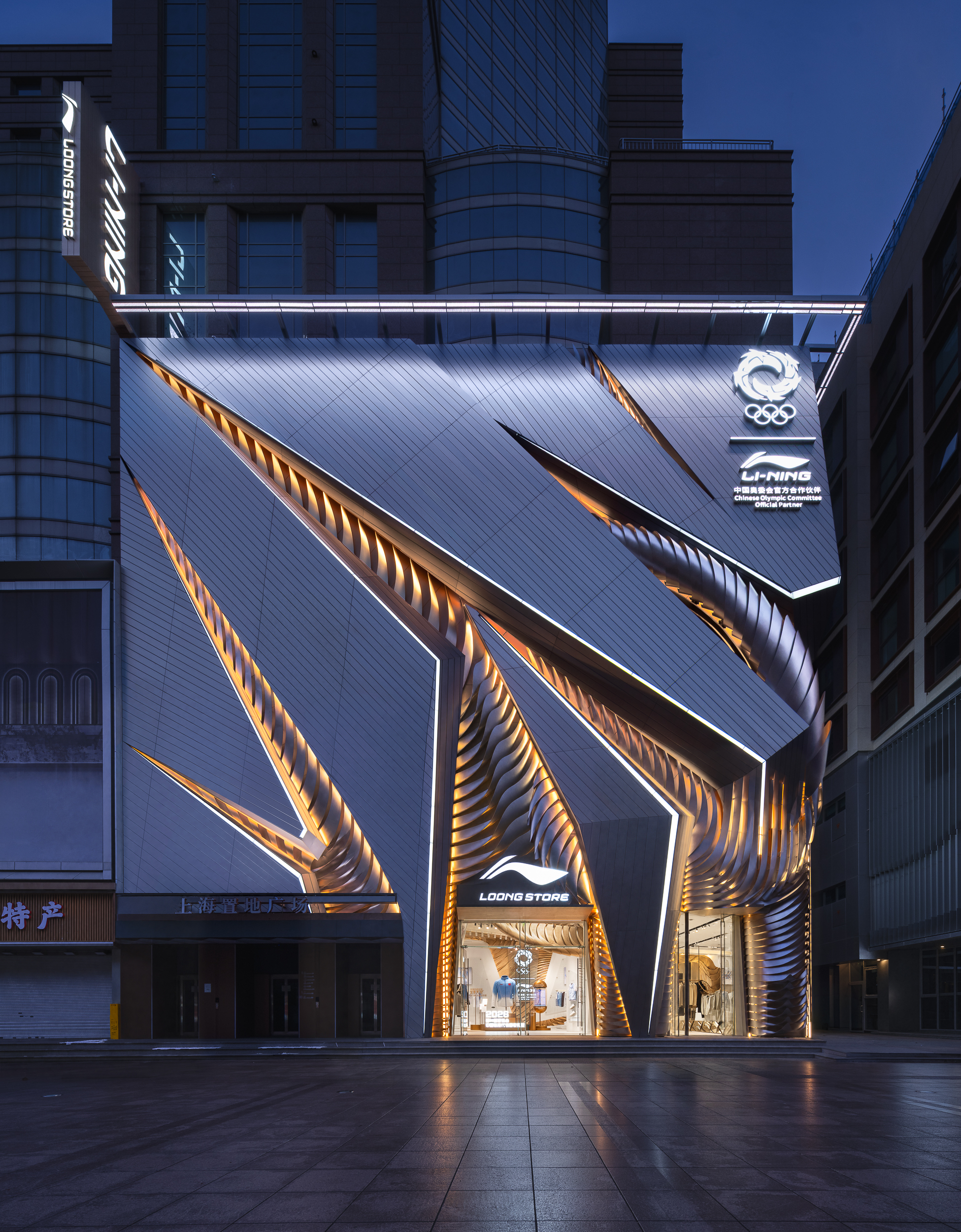
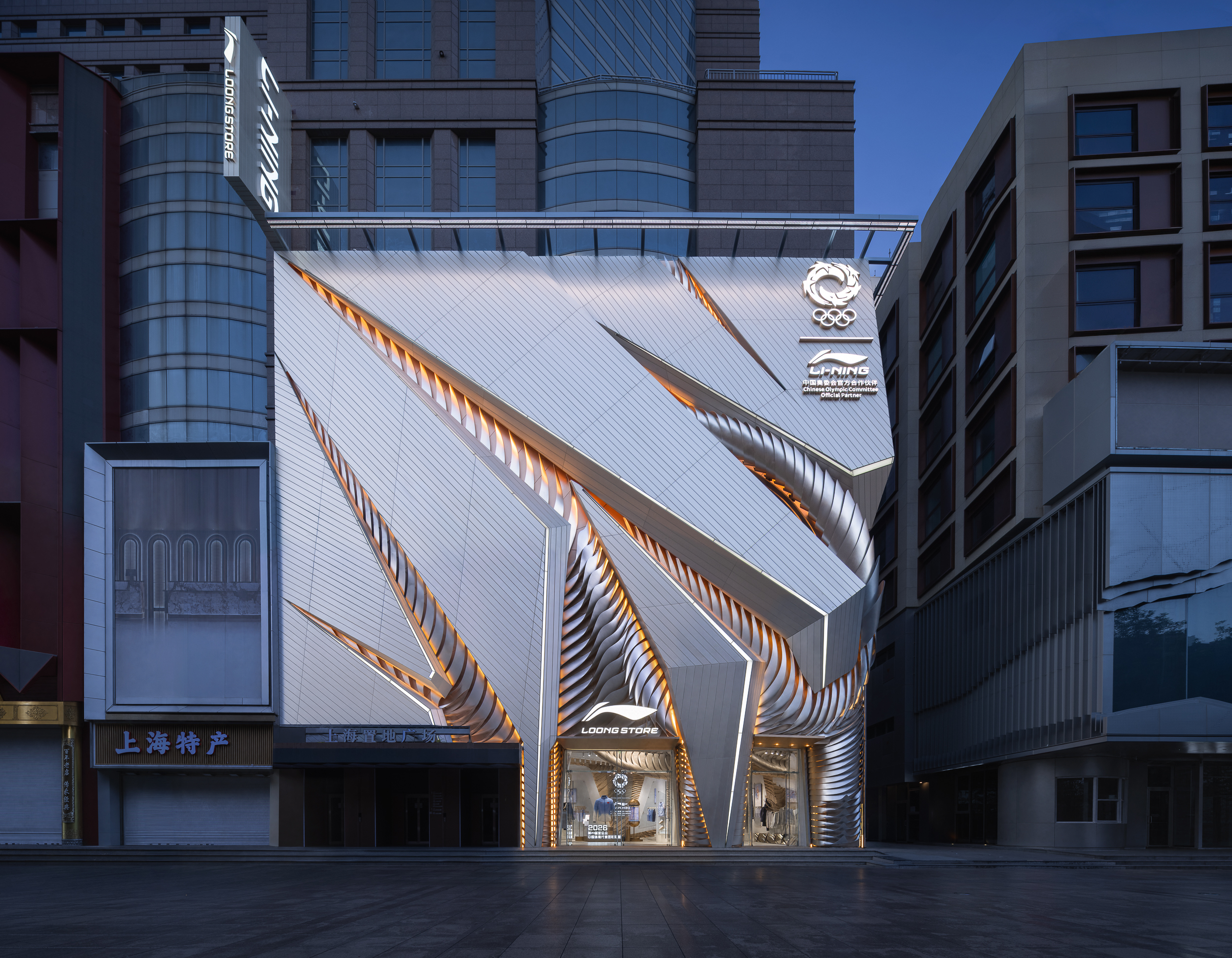
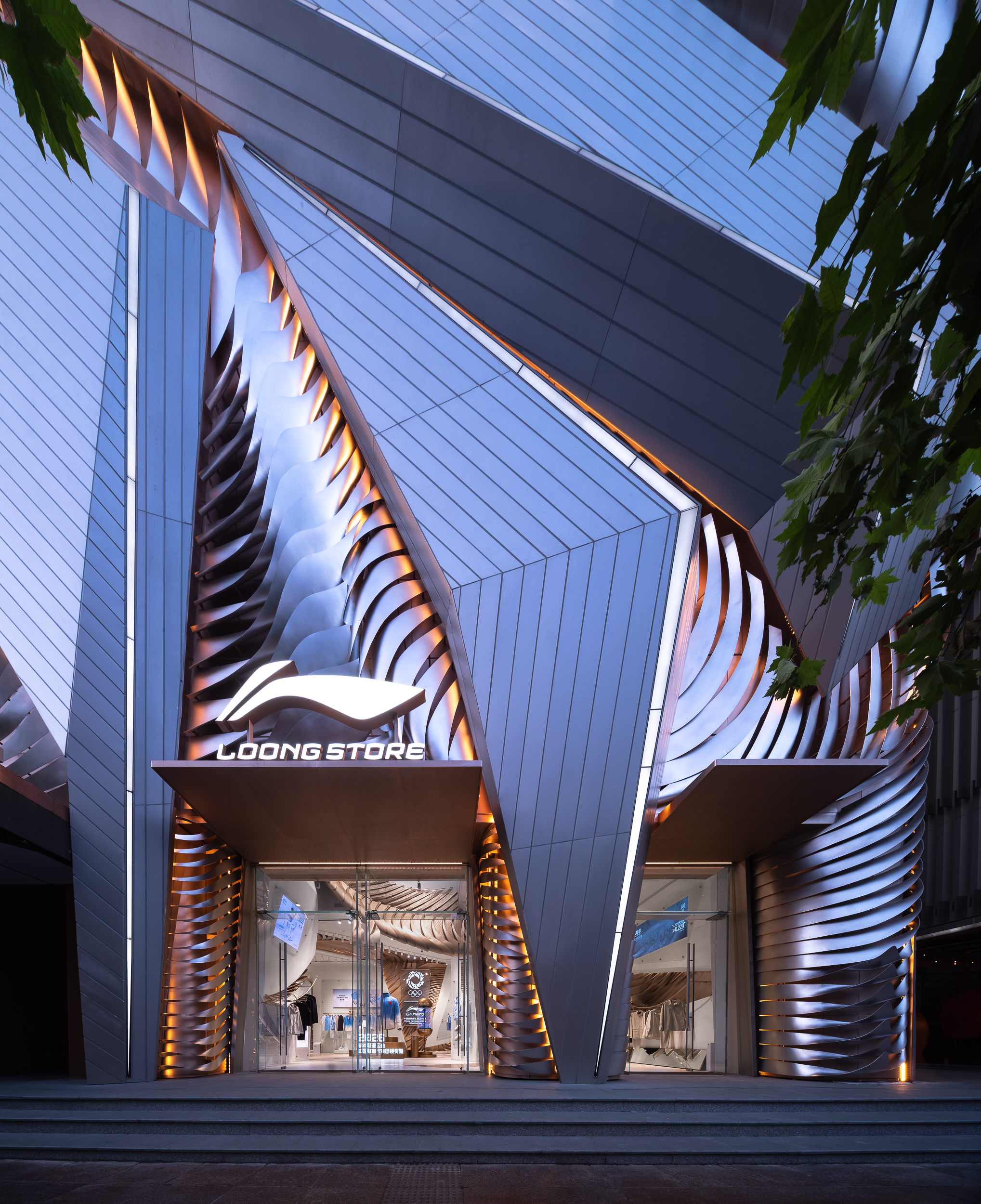
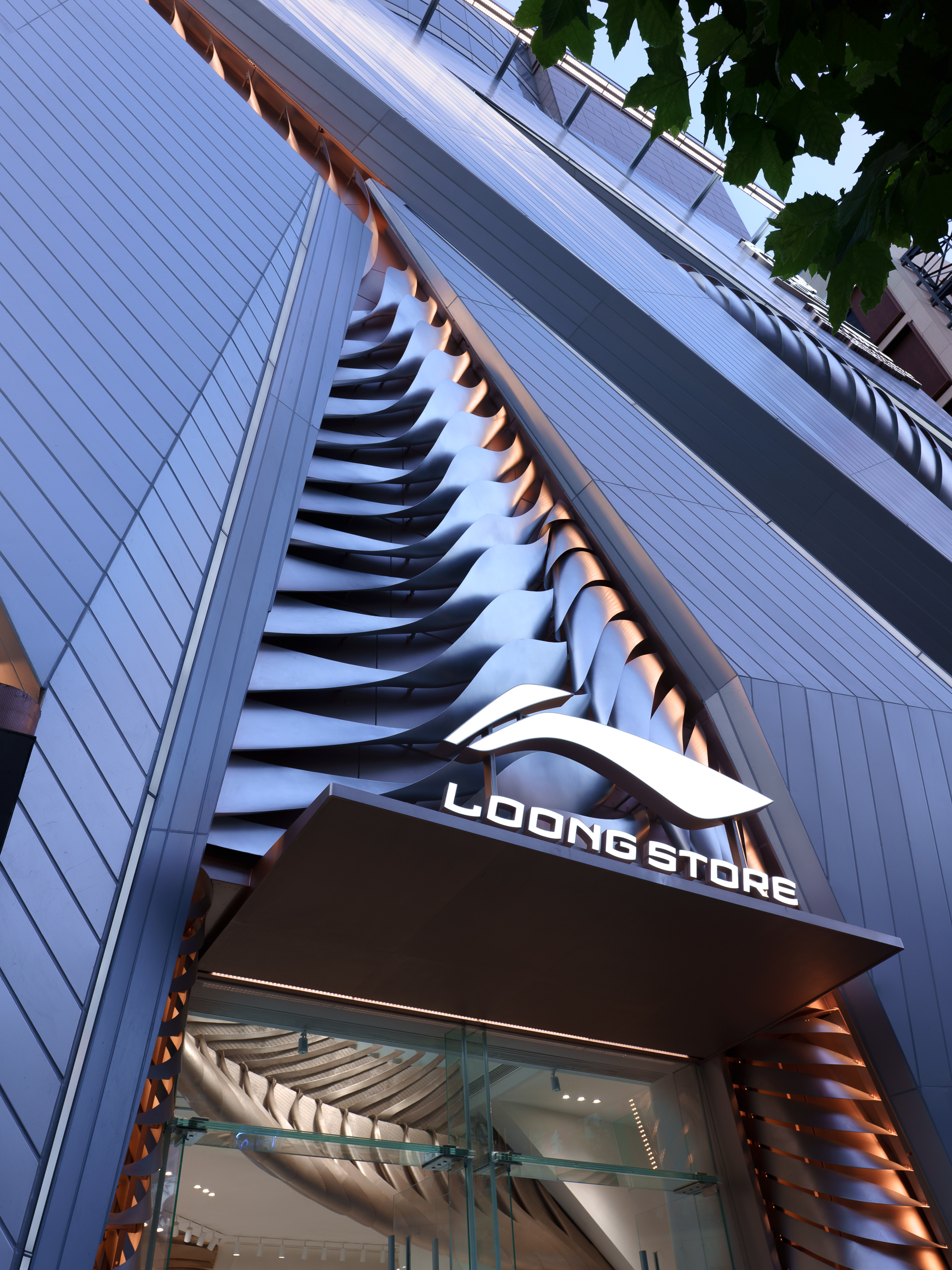
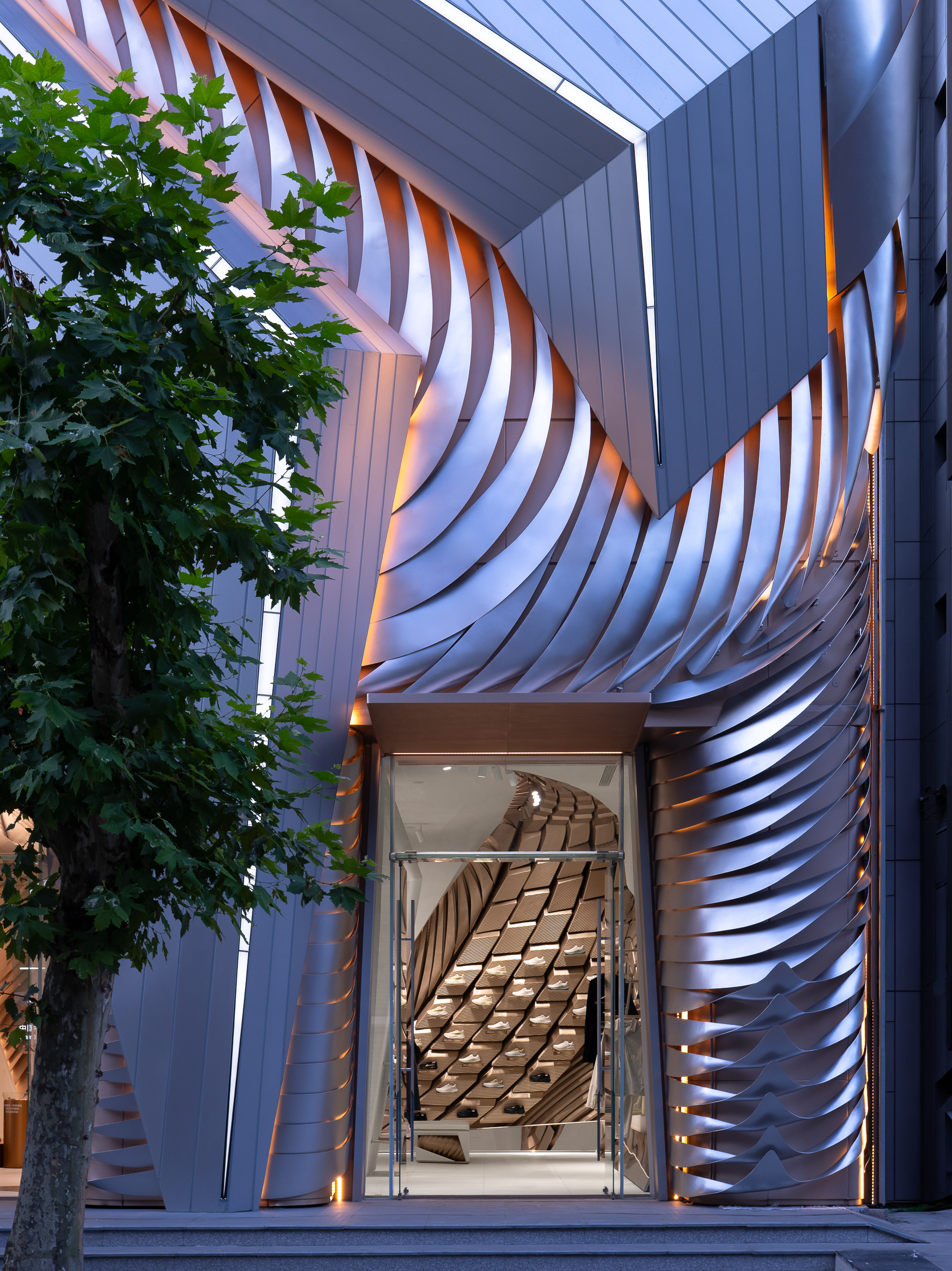
Substantial, irregular rock-like masses clad in silver-grey brushed metal panels establish a stable base at the urban scale. Layered, twisting curved elements are embedded within them, abstracting the form of dragon scales and tracing the sweeping momentum of a giant dragon lying beneath the strata as it surges forward.
The rock acts as a vessel for latent energy—massive, rough, and grounded, accumulating explosive force layer by layer. It is analogous to the stability, resilience, and sustained exertion that underpin elite sport. The dragon, by contrast, is the spirit of kinetic energy. The undulating body carries the muscular tension of an athlete at the limit and the velocity of a sprint down the track. Athletic power is thus translated into architectural language.
The static rock base and dynamic dragon form interlock, while shadowed joints and illuminated reveals lend depth and dimensionality to the facade, turning the building envelope into a monumental sculptural installation. Mutually reinforcing, the two systems generate the space's central emotional tension and precisely articulate Li-Ning's athletic character and Eastern cultural identity.
The main entrance is recessed, with elements on either side converging radially toward it. After dark, dynamic LED lighting pulses along the dragon-like structure, merging a high-tech silver finish with the spirit of the dragon through light and shadow—refined in material expression yet charged with youthful energy. The Chinese Olympic Committee emblem, paired with the “LI-NING LOONG STORE” wordmark, unifies brand recognition with the thematic narrative. Eastern dragon imagery, contemporary architectural aesthetics, and the brand's sporting DNA converge to imbue the facade with strength, technology, and a distinctly Eastern sensibility.
Entering the heart of the Rock, Wandering with the Dragon
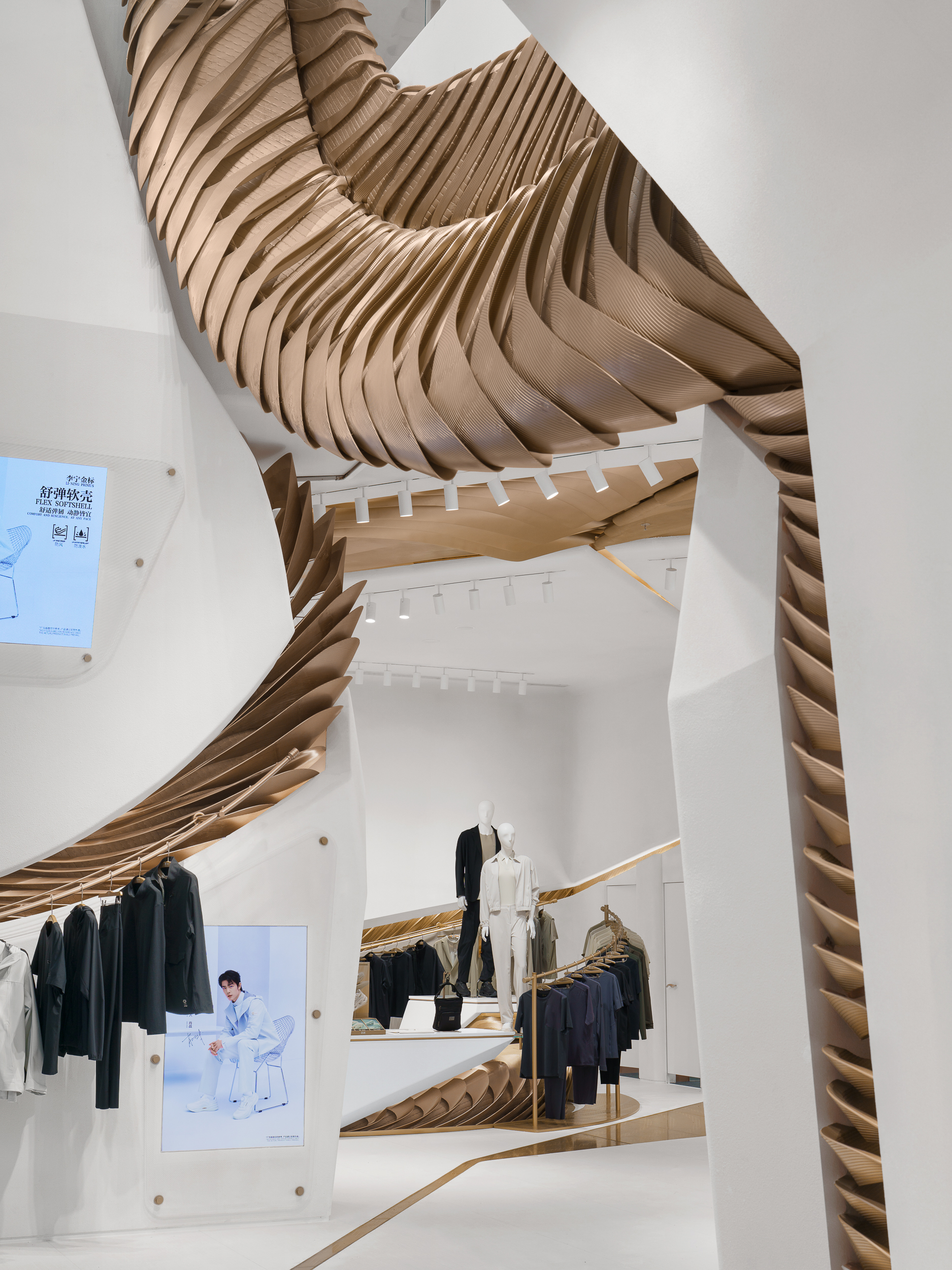
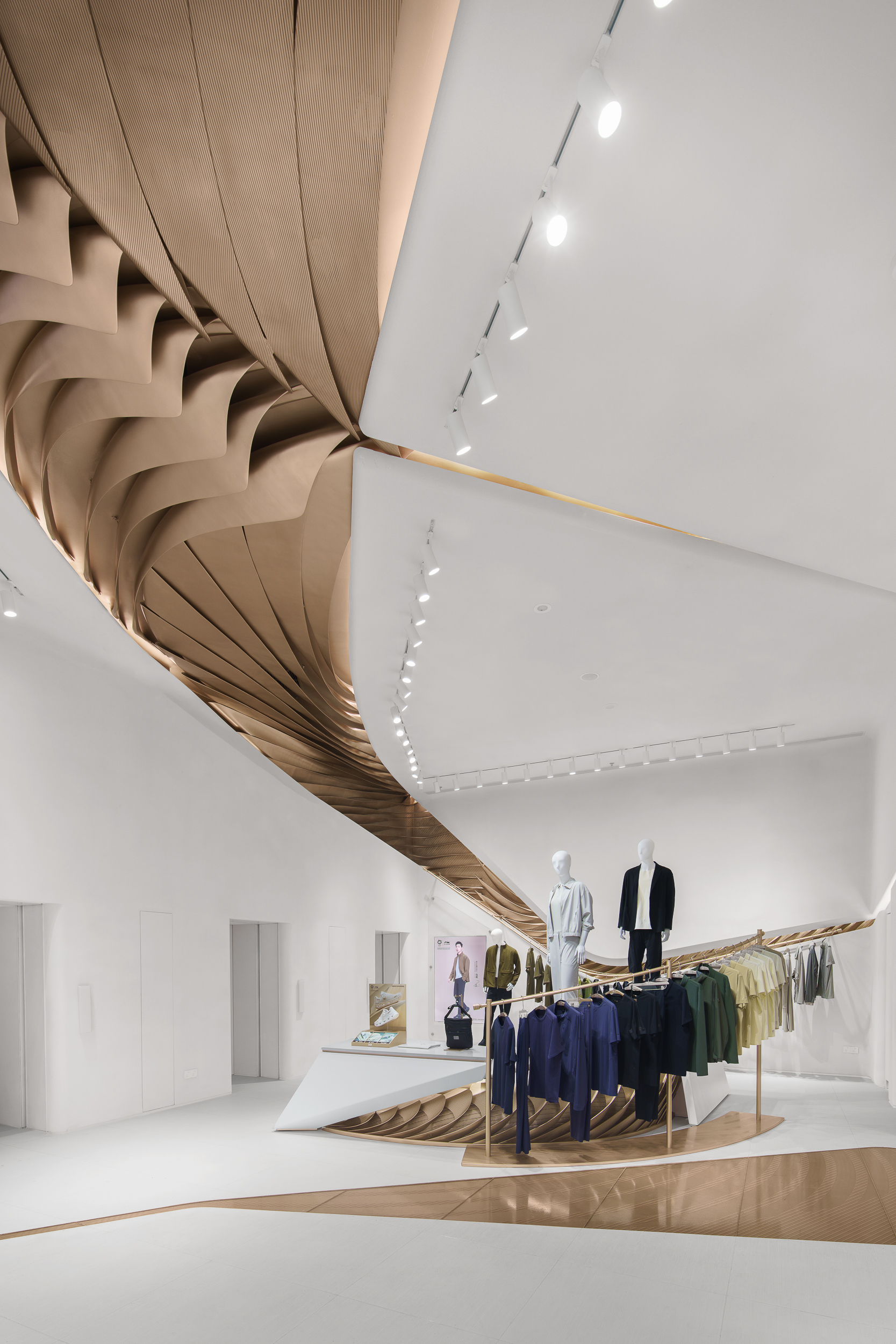
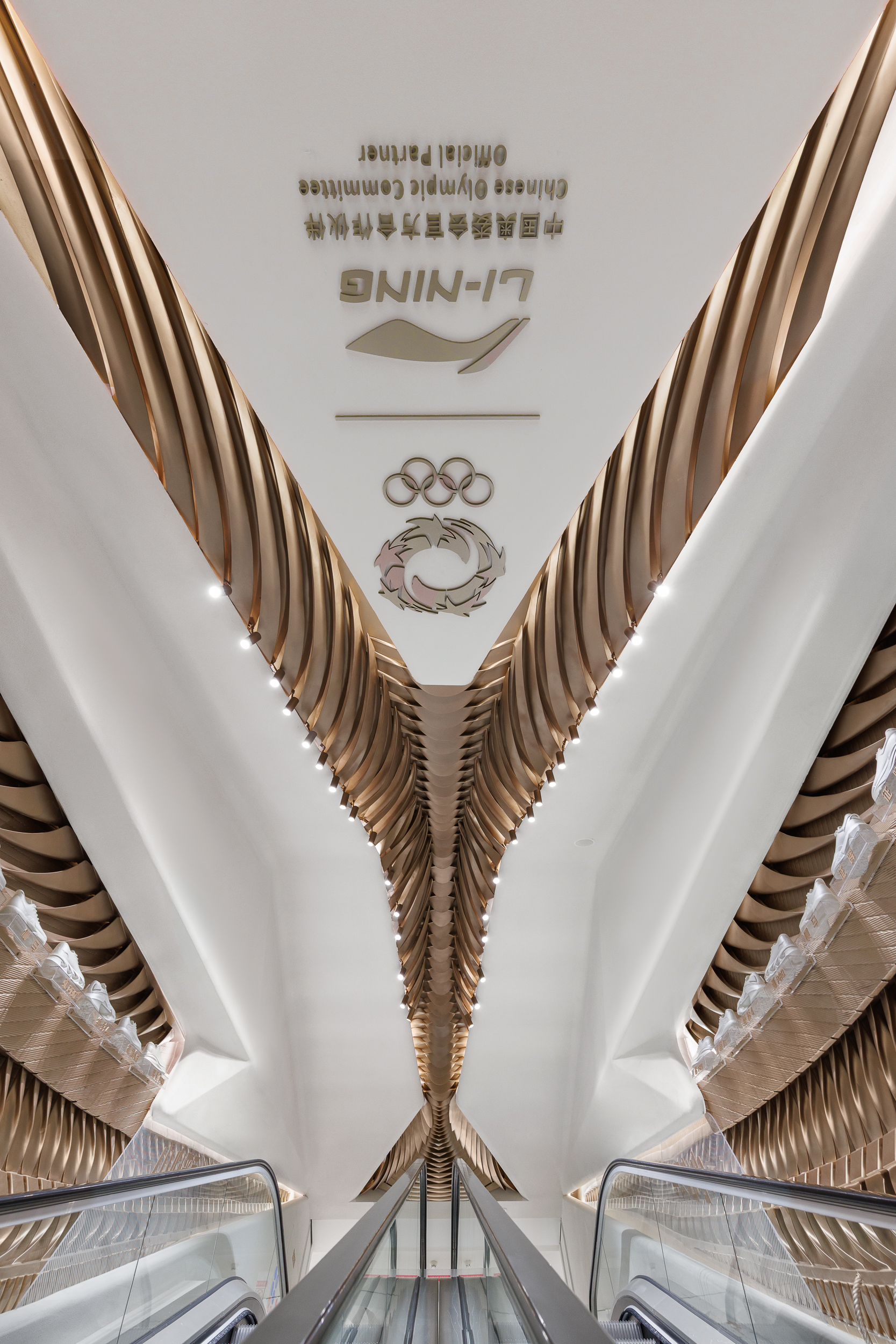
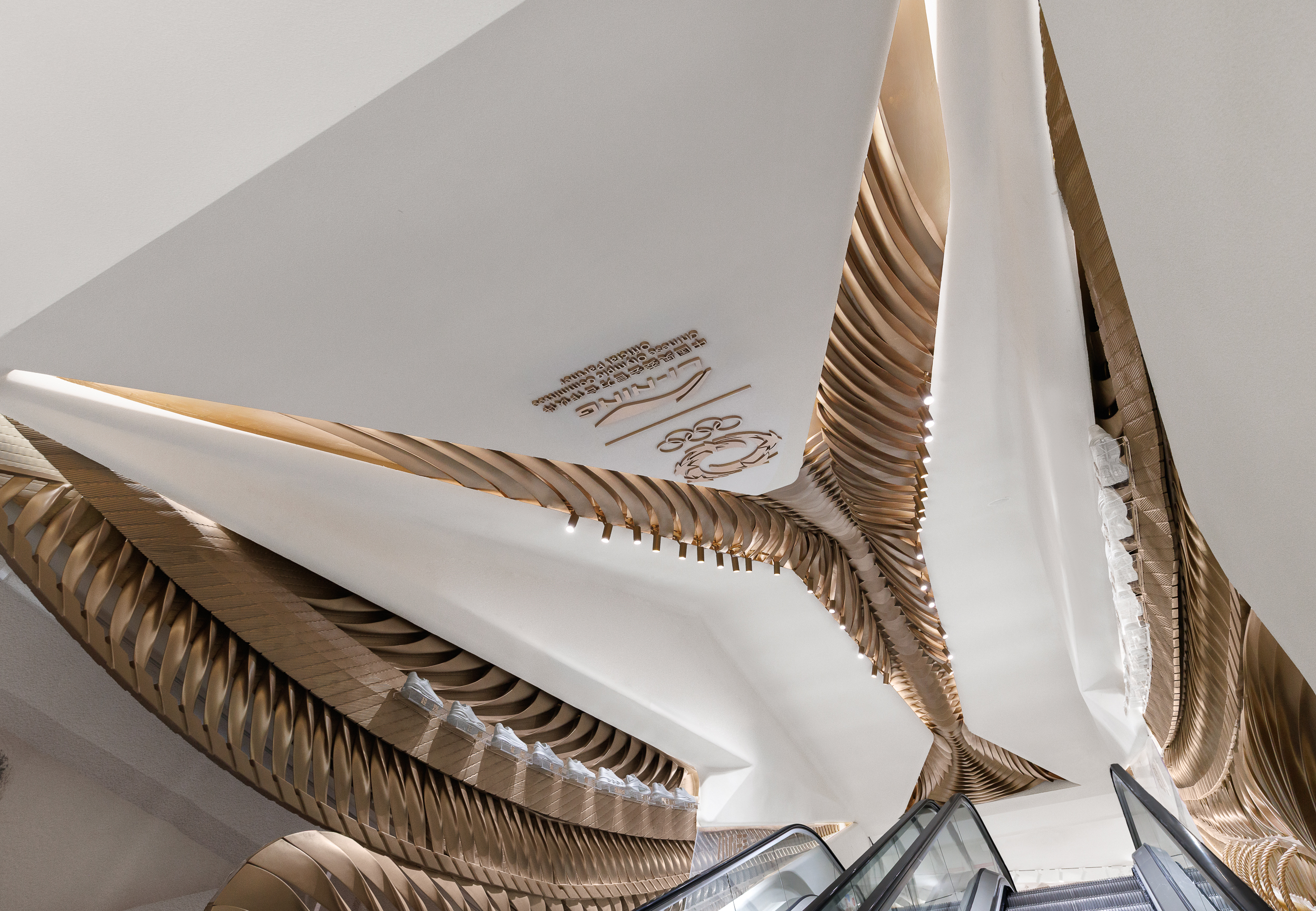
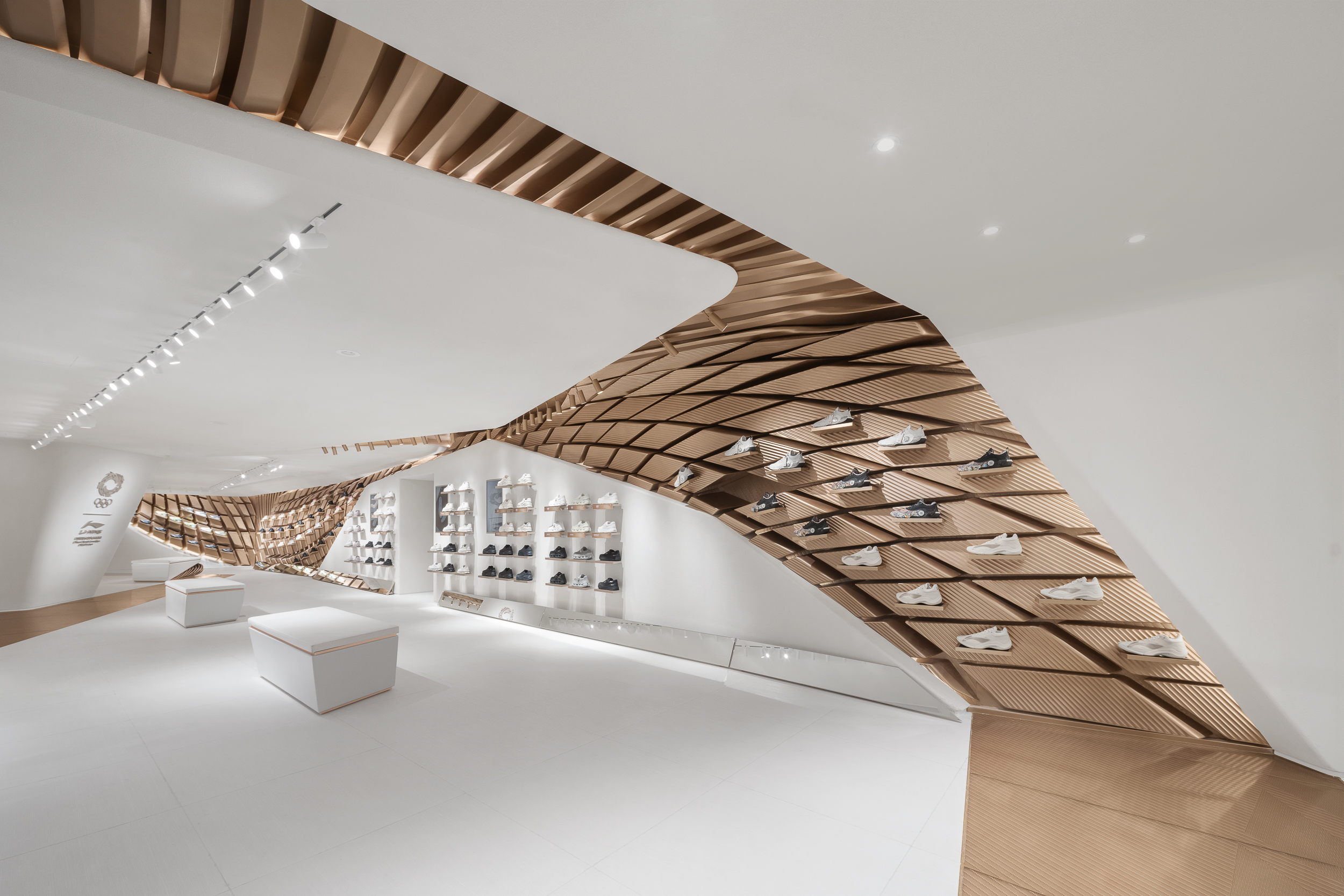
Crossing the threshold feels like entering the interior of a rock formation and moving among the traces of a coiling dragon. The designers conceived the interior as a continuous rock chamber, inviting visitors to sense a force rarely encountered in everyday life. Walls, floors, and display plinths employ different materials while sharing a unified rock-like texture. The dragon form extends inward from the facade, weaving continuously through the space without visible beginning or end, creating a seamless narrative between exterior and interior.
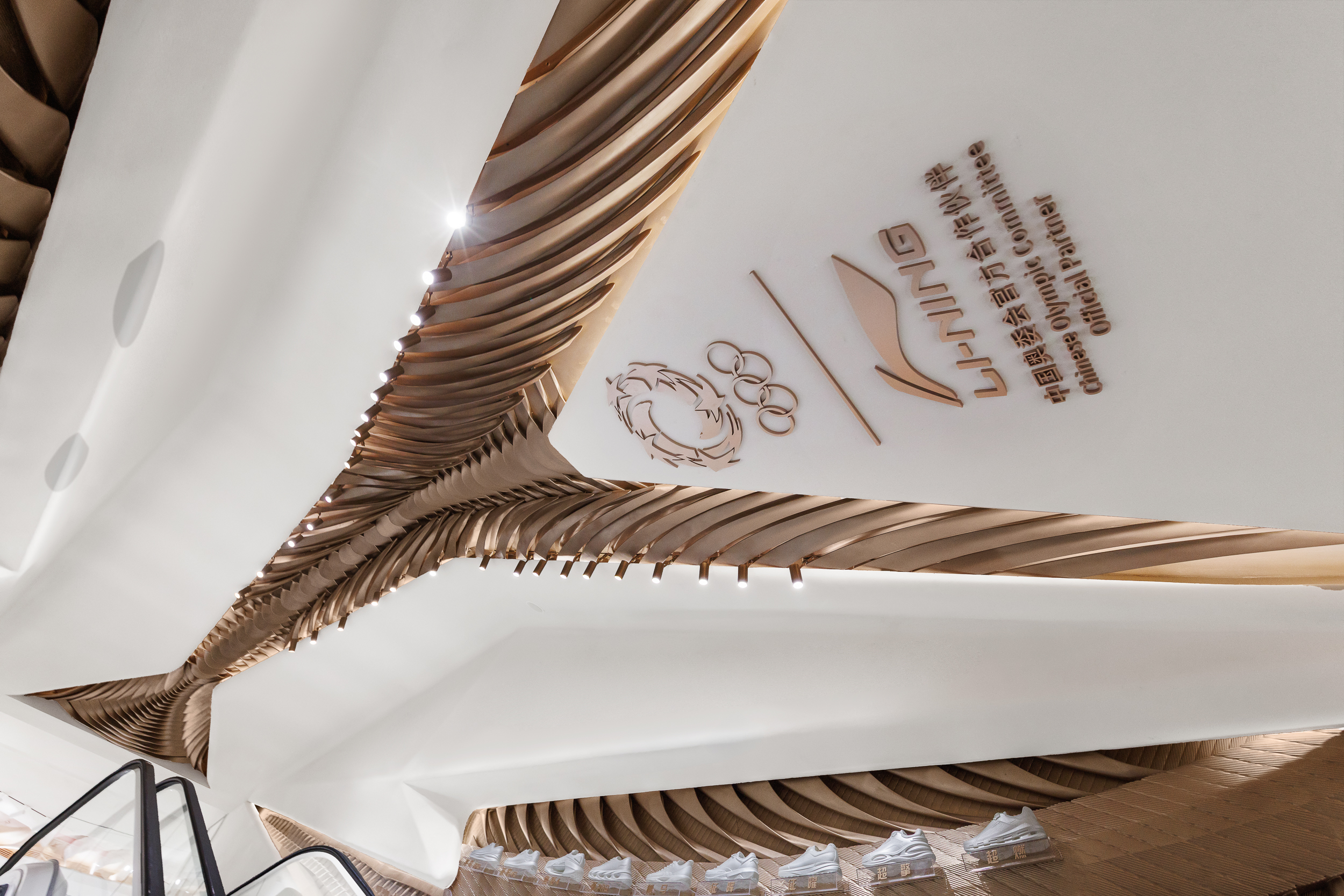
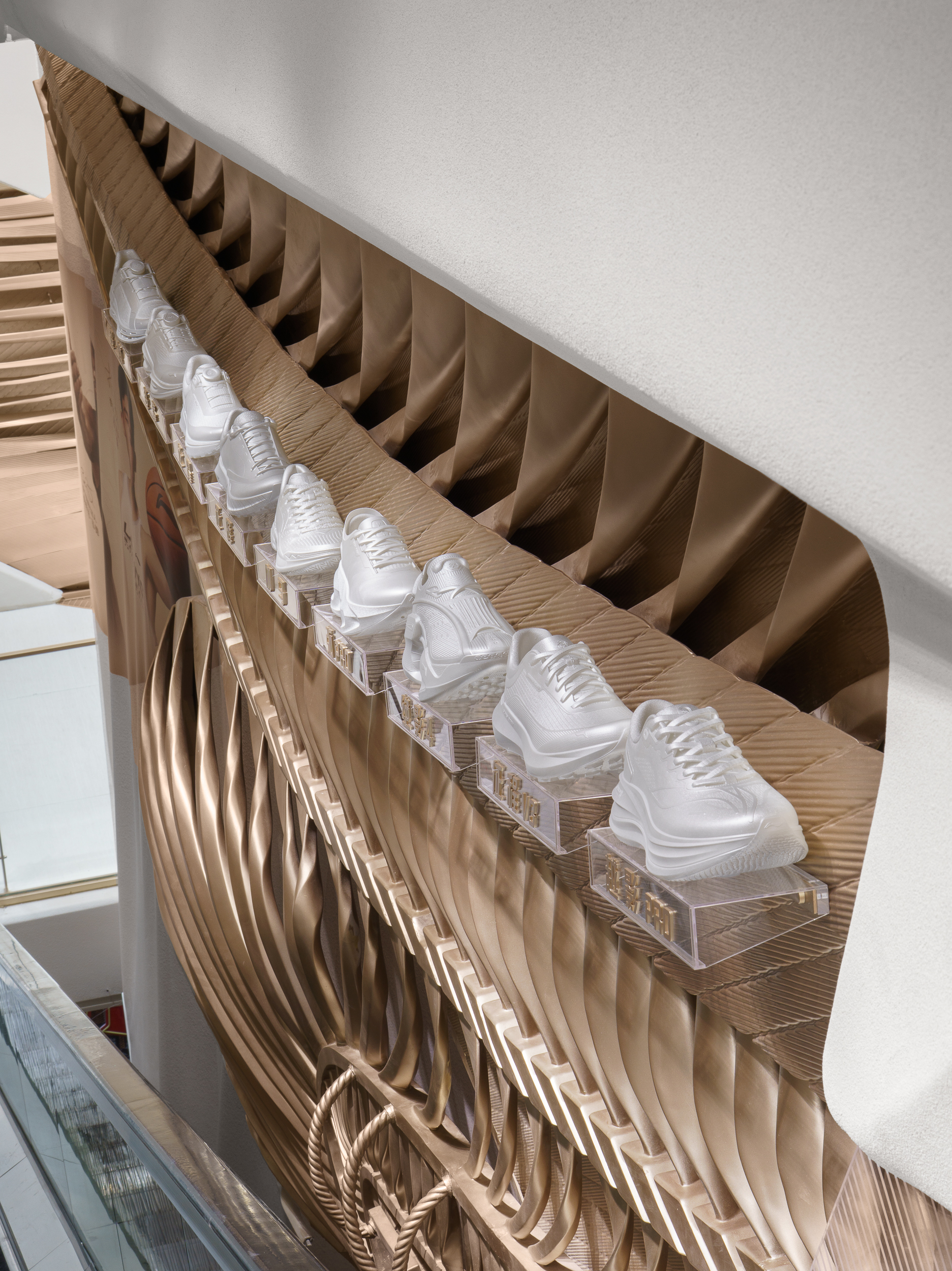
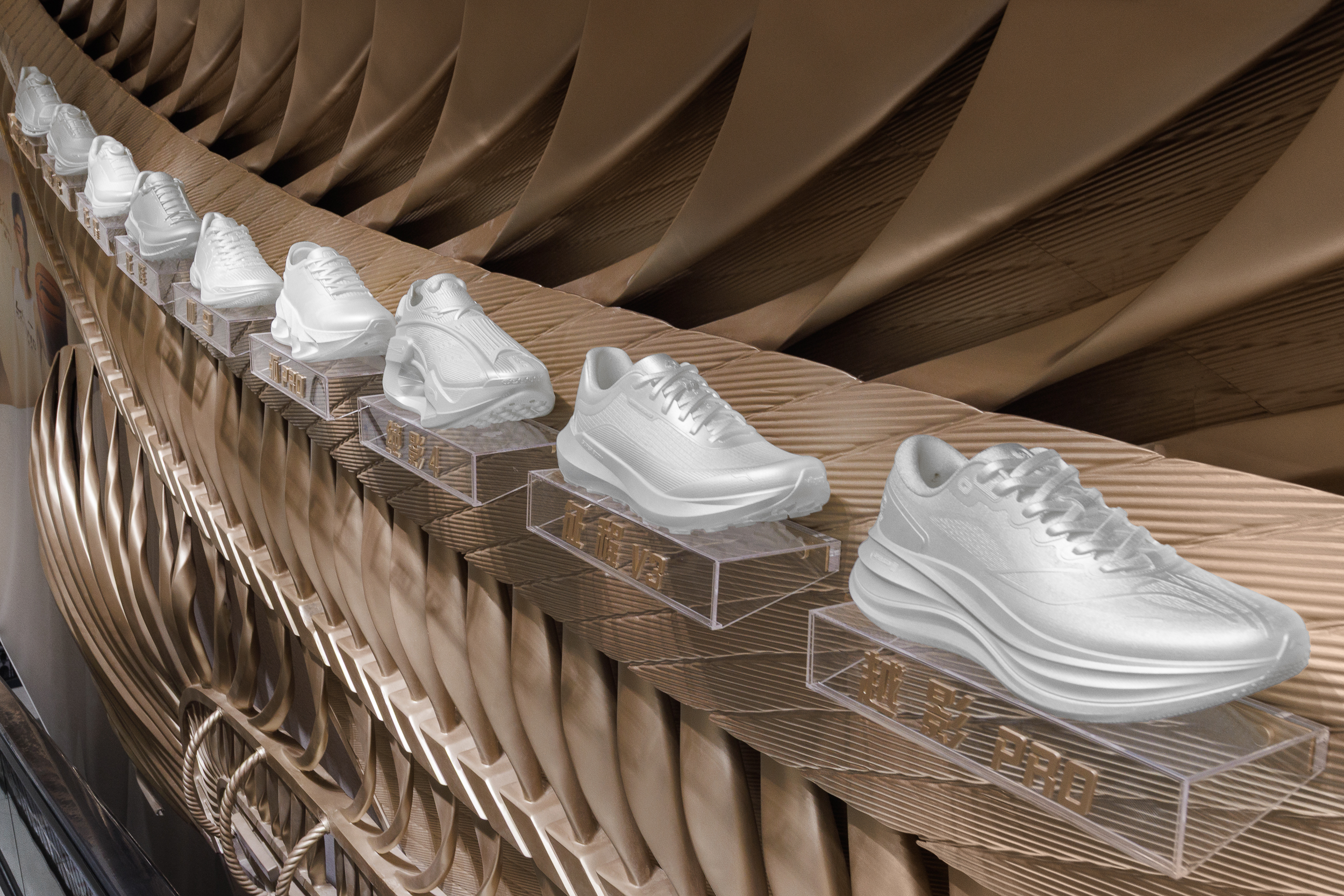
Metallic textures evoke the tension of muscle and bone, while sweeping curves choreograph the movement of the eye. The interior's spatial flow resonates with the brand's physical power. Sportswear appears to float between sections of the dragon structure, making the display system itself part of the coiling motion. Product and space enter into dialogue, woven together within the texture of the rock chamber.
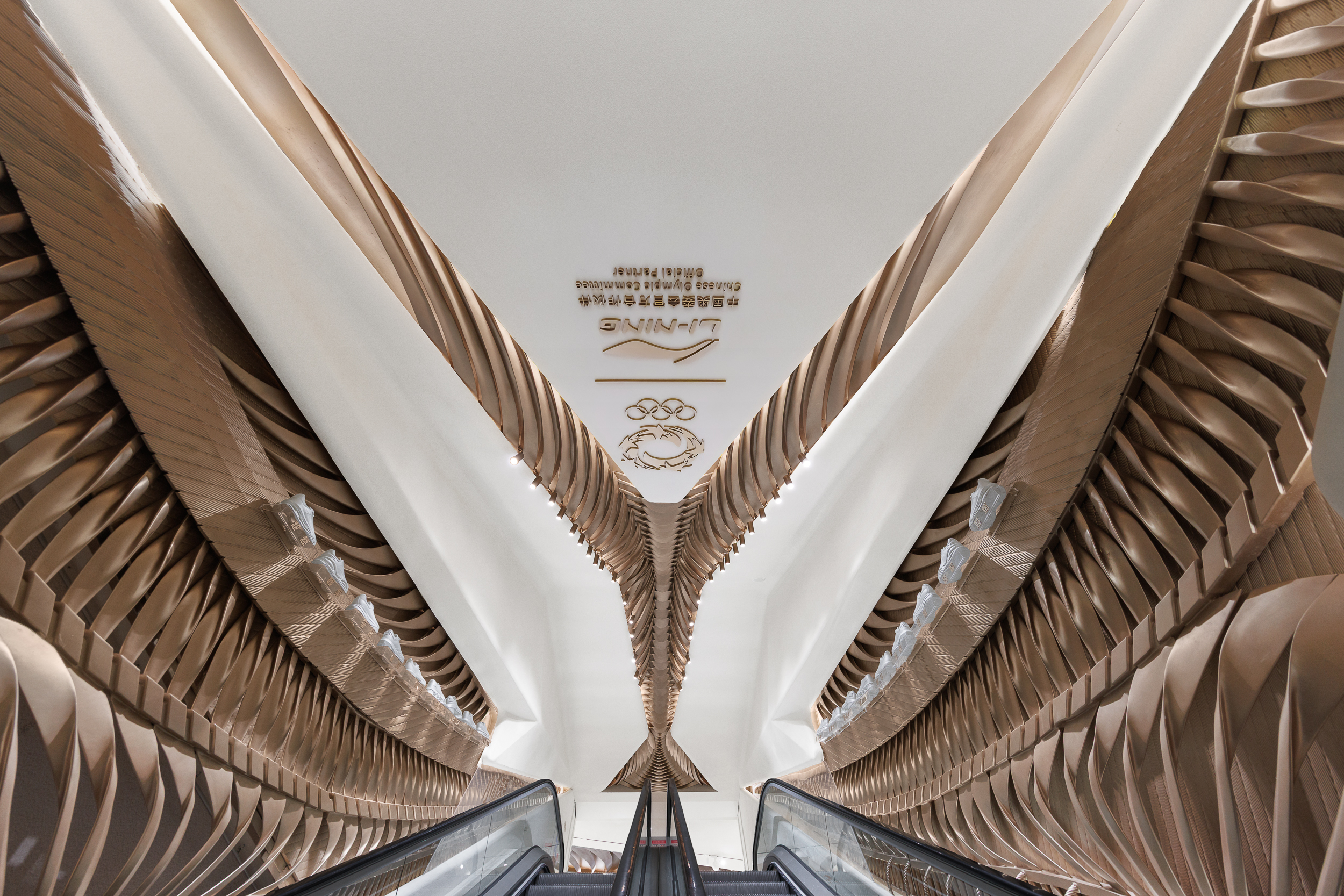
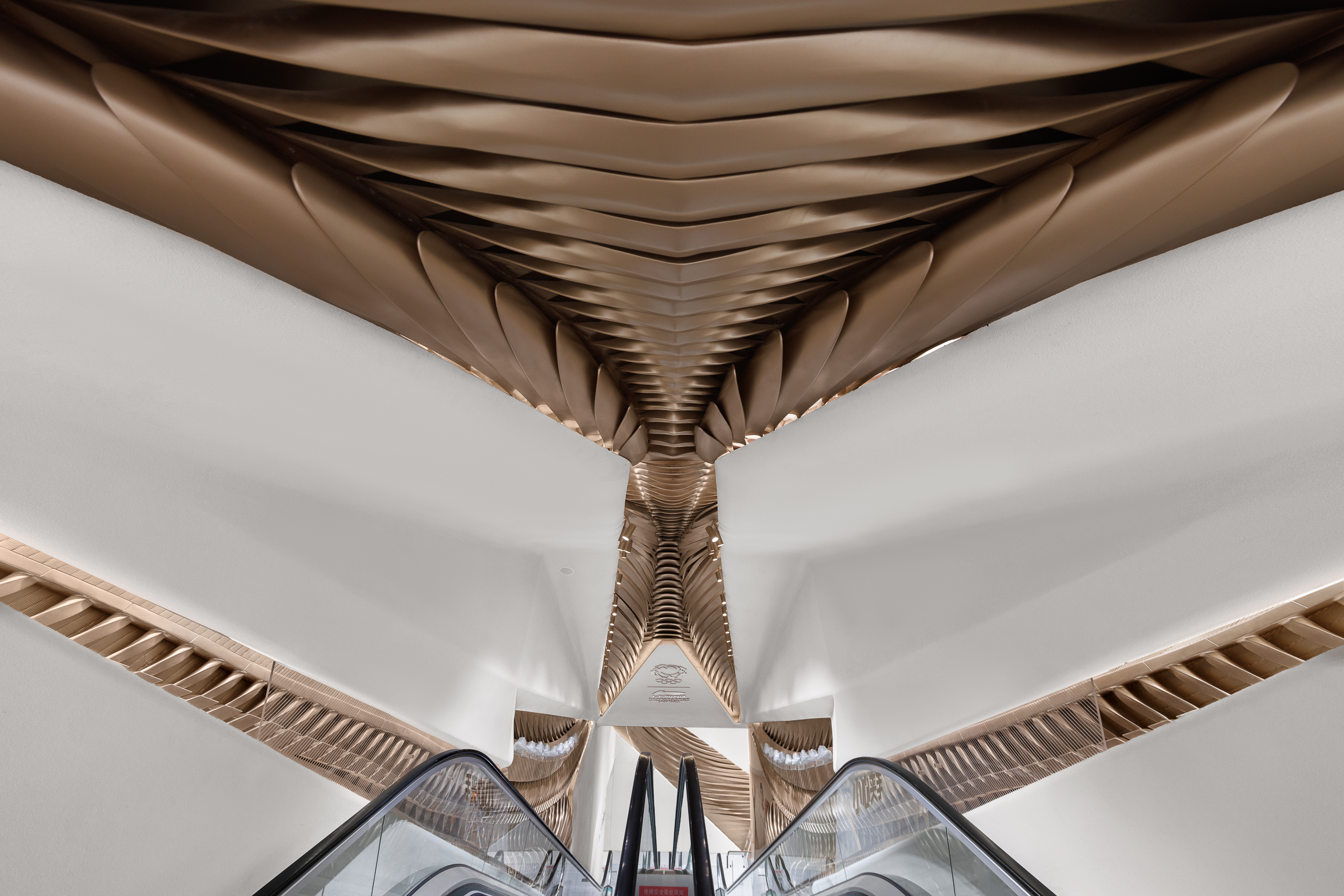
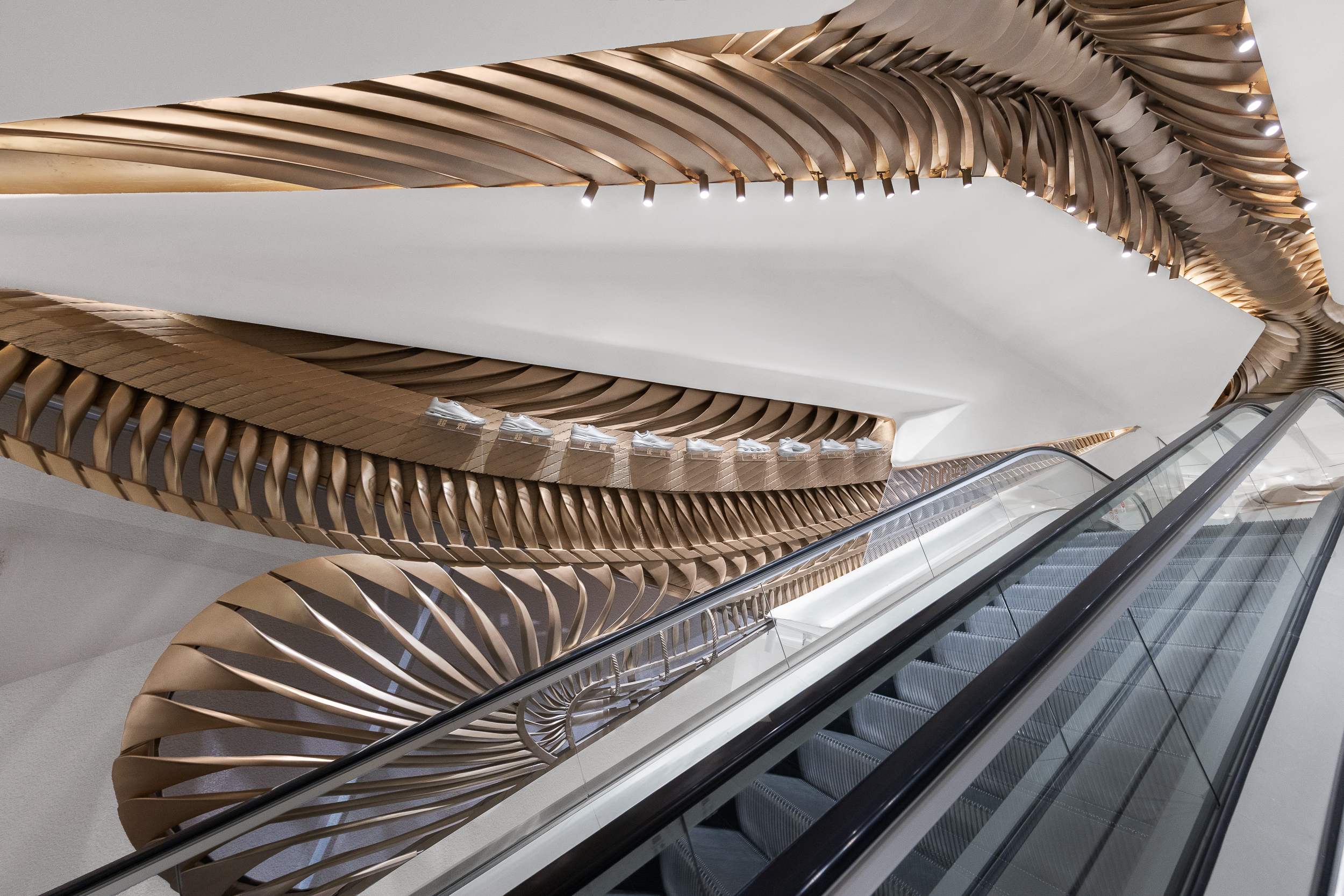
In the elevator lobby, an abstracted structure evokes the dragon's head and establishes a visual anchor for the entire store. As visitors move through the space, the narrative unfolds naturally around them.
Translating the Symbol: From Concept to Function Across Every Scenario
The designers went beyond creating a visual style, carrying the core concept through to every practical design decision.
Within the display areas, a full, sweeping “dragon spine” expresses the aspirational beauty of striving beyond one's limits—an idea central to the Olympic spirit—while also functioning as a display surface for footwear. Running in parallel is another system closely tied to the brand's products: the interlocking logic of a zipper. Extracted from the construction detailing of apparel, individual zipper teeth are repeatedly folded and twisted to form functional interfaces for display plinths and racks, embedding the brand's technical manufacturing DNA in every detail.
Regular linear sequences echo the wave-like graphics on digital advertising screens, establishing a cohesive visual rhythm.
Sport · Technology · Future
Ultimately, the space gives voice to the brand ethos as it moves through every material, every shaft of light, and every moment of pause.
Sport is the starting point of the spatial narrative. Structured around a looping circulation route encircling the escalator, repeated modular elements gradually shift, layer, and twist, recalling the successive frames of high-speed photography. The sense of movement is unmistakable.
Technology makes that movement perceptible with precision. Every fixture is articulated with industrial rigor: the engineering performance of materials, the directionality of textures, and the density of interlocking curves have all been carefully considered and digitally refined. Technology is no longer confined to specifications on a product label; it becomes something visitors experience bodily within the space.
All of this ultimately points toward the future. A platinum-white interior palette creates an open visual framework for imagination, while hybrid programs—including a salon and DIY workshop—introduce an inclusive platform that feels both fashionable and forward-looking. Together, they foster a deeper emotional connection between the brand and a new generation of consumers.
Born by Breaking Boundaries
In creating the Li-Ning LOONG STORE, the designers departed from the prevailing convention of covering commercial-street facades with LED advertising screens, opting instead for a distinctive sculptural architectural language. No freestanding sculpture is deliberately inserted into the space; the architecture itself becomes the work of art.
This is the point at which boundaries are first broken—and where differentiated innovation takes form. It makes the brand’s artistic ambition visible: translating an intangible ethos into a tangible, embodied presence; releasing latent power from stillness into movement throughout the space; and pushing retail beyond conventional boundaries and transactional purpose to become an immersive dialogue with the brand ethos.
Nanjing East Road embodies Shanghai's rich historical legacy while pulsing with the energy of contemporary commerce. The opening of Li-Ning's premium retail format, LOONG STORE, at this landmark address signals more than the debut of a new flagship: it is a declaration of how a sports brand can redefine itself through the language of space.
Founded more than three decades ago, Li-Ning is rooted in Olympic achievement and a strong sense of cultural confidence. As the brand opens a new chapter under the name “Loong(which means dragon in Chinese),” the designers looked beyond the dragon as a literal symbol and focused instead on its kinetic force: an energy in the making—coiling, rising, and gathering deep beneath the earth before breaking through the surface. This is the essence of sport: not merely the instant of release, but the irrepressible power building before it.
The design intent therefore became both clear and resolute: to translate this perpetual momentum into an abstract spatial expression of the brand's ethos, allowing the tension of “power breaking through boundaries” to unfold across the building facade and take material form in every texture of the interior.
Power as the Point of Departure
Through an in-depth study of the retail concept, the designers adopted the dragon as a spiritual metaphor and distilled it to a state of pure force: the latent tension of a dragon weaving and coiling through rock, poised to break free. Stillness and motion, accumulation and release, stability and rupture coexist. This duality evokes the embodied memory of competitive sport and gives tangible form to Li-Ning's brand ethos. From it emerged the central narrative of the “Dragon in the Rock,” in which the beauty of motion is recast through a moment of sculptural stillness.
An Urban Sculpture Breaking Through the Rock
A distinctive design language is what enables a space to endure over time. The facade becomes the most direct expression of that identity to the city—and the visual cover of the entire narrative.
Substantial, irregular rock-like masses clad in silver-grey brushed metal panels establish a stable base at the urban scale. Layered, twisting curved elements are embedded within them, abstracting the form of dragon scales and tracing the sweeping momentum of a giant dragon lying beneath the strata as it surges forward.
The rock acts as a vessel for latent energy—massive, rough, and grounded, accumulating explosive force layer by layer. It is analogous to the stability, resilience, and sustained exertion that underpin elite sport. The dragon, by contrast, is the spirit of kinetic energy. The undulating body carries the muscular tension of an athlete at the limit and the velocity of a sprint down the track. Athletic power is thus translated into architectural language.
The static rock base and dynamic dragon form interlock, while shadowed joints and illuminated reveals lend depth and dimensionality to the facade, turning the building envelope into a monumental sculptural installation. Mutually reinforcing, the two systems generate the space's central emotional tension and precisely articulate Li-Ning's athletic character and Eastern cultural identity.
The main entrance is recessed, with elements on either side converging radially toward it. After dark, dynamic LED lighting pulses along the dragon-like structure, merging a high-tech silver finish with the spirit of the dragon through light and shadow—refined in material expression yet charged with youthful energy. The Chinese Olympic Committee emblem, paired with the “LI-NING LOONG STORE” wordmark, unifies brand recognition with the thematic narrative. Eastern dragon imagery, contemporary architectural aesthetics, and the brand's sporting DNA converge to imbue the facade with strength, technology, and a distinctly Eastern sensibility.
Entering the heart of the Rock, Wandering with the Dragon
Crossing the threshold feels like entering the interior of a rock formation and moving among the traces of a coiling dragon. The designers conceived the interior as a continuous rock chamber, inviting visitors to sense a force rarely encountered in everyday life. Walls, floors, and display plinths employ different materials while sharing a unified rock-like texture. The dragon form extends inward from the facade, weaving continuously through the space without visible beginning or end, creating a seamless narrative between exterior and interior.
Metallic textures evoke the tension of muscle and bone, while sweeping curves choreograph the movement of the eye. The interior's spatial flow resonates with the brand's physical power. Sportswear appears to float between sections of the dragon structure, making the display system itself part of the coiling motion. Product and space enter into dialogue, woven together within the texture of the rock chamber.
In the elevator lobby, an abstracted structure evokes the dragon's head and establishes a visual anchor for the entire store. As visitors move through the space, the narrative unfolds naturally around them.
Translating the Symbol: From Concept to Function Across Every Scenario
The designers went beyond creating a visual style, carrying the core concept through to every practical design decision.
Within the display areas, a full, sweeping “dragon spine” expresses the aspirational beauty of striving beyond one's limits—an idea central to the Olympic spirit—while also functioning as a display surface for footwear. Running in parallel is another system closely tied to the brand's products: the interlocking logic of a zipper. Extracted from the construction detailing of apparel, individual zipper teeth are repeatedly folded and twisted to form functional interfaces for display plinths and racks, embedding the brand's technical manufacturing DNA in every detail.
Regular linear sequences echo the wave-like graphics on digital advertising screens, establishing a cohesive visual rhythm.
Sport · Technology · Future
Ultimately, the space gives voice to the brand ethos as it moves through every material, every shaft of light, and every moment of pause.
Sport is the starting point of the spatial narrative. Structured around a looping circulation route encircling the escalator, repeated modular elements gradually shift, layer, and twist, recalling the successive frames of high-speed photography. The sense of movement is unmistakable.
Technology makes that movement perceptible with precision. Every fixture is articulated with industrial rigor: the engineering performance of materials, the directionality of textures, and the density of interlocking curves have all been carefully considered and digitally refined. Technology is no longer confined to specifications on a product label; it becomes something visitors experience bodily within the space.
All of this ultimately points toward the future. A platinum-white interior palette creates an open visual framework for imagination, while hybrid programs—including a salon and DIY workshop—introduce an inclusive platform that feels both fashionable and forward-looking. Together, they foster a deeper emotional connection between the brand and a new generation of consumers.
Born by Breaking Boundaries
In creating the Li-Ning LOONG STORE, the designers departed from the prevailing convention of covering commercial-street facades with LED advertising screens, opting instead for a distinctive sculptural architectural language. No freestanding sculpture is deliberately inserted into the space; the architecture itself becomes the work of art.
This is the point at which boundaries are first broken—and where differentiated innovation takes form. It makes the brand’s artistic ambition visible: translating an intangible ethos into a tangible, embodied presence; releasing latent power from stillness into movement throughout the space; and pushing retail beyond conventional boundaries and transactional purpose to become an immersive dialogue with the brand ethos.
